

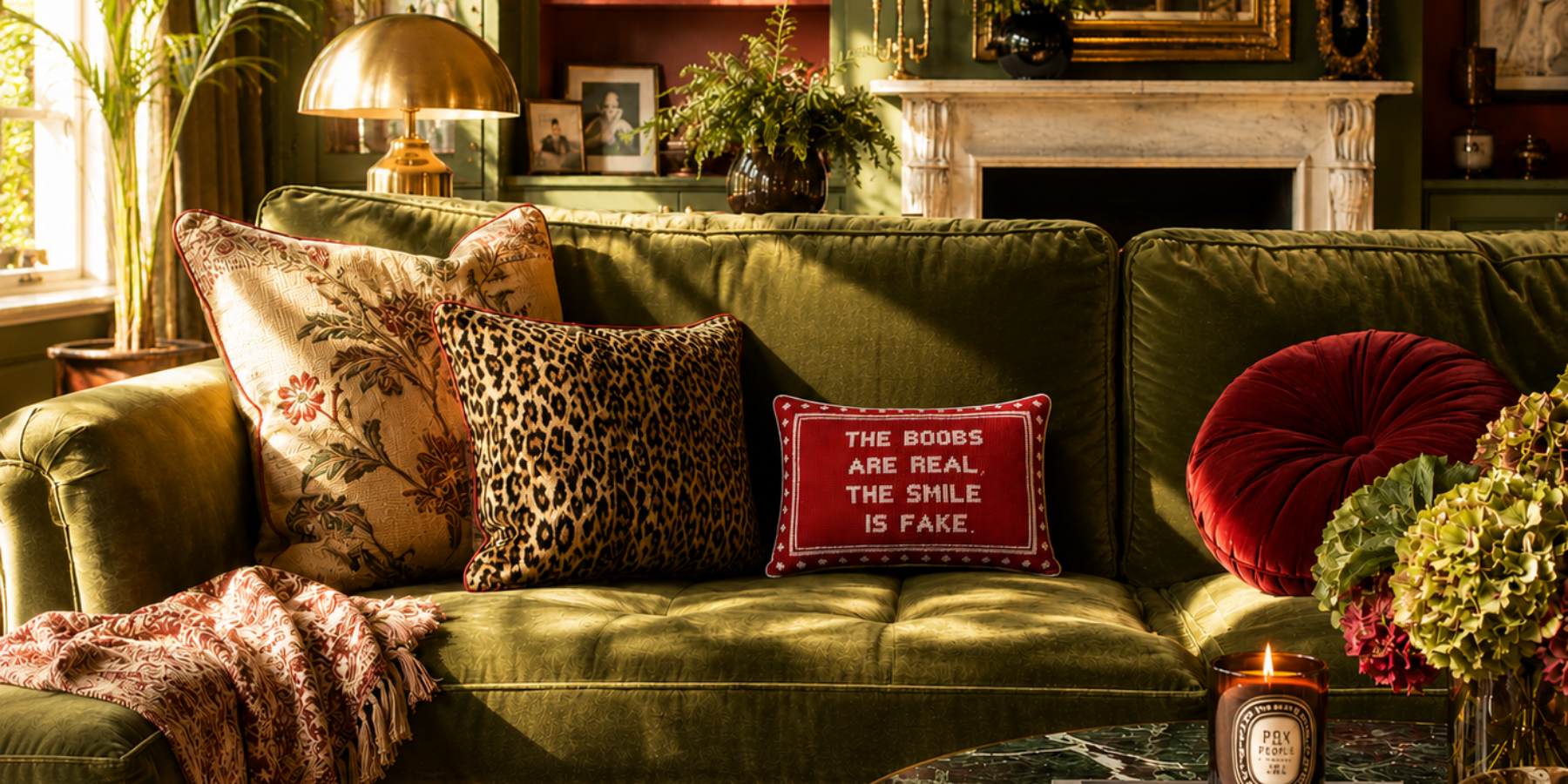
THE JOURNAL · THE WORLD OF HANDMADE NEEDLEPOINT
What Is Needlepoint?
It's not your grandmother's hobby.
Well — maybe it is. But she had extraordinary taste.
BY ELEONORA FREY OUR HOME OUR CASTLE, USTER SWITZERLAND
Needlepoint has a PR problem. It gets lumped in with dusty craft-room pastimes, associated with patience and retirement rather than design confidence and intention. That ends here. Because if you've ever held a finished needlepoint piece — really held one, felt the weight and density of it — you already understand that this is something else entirely.
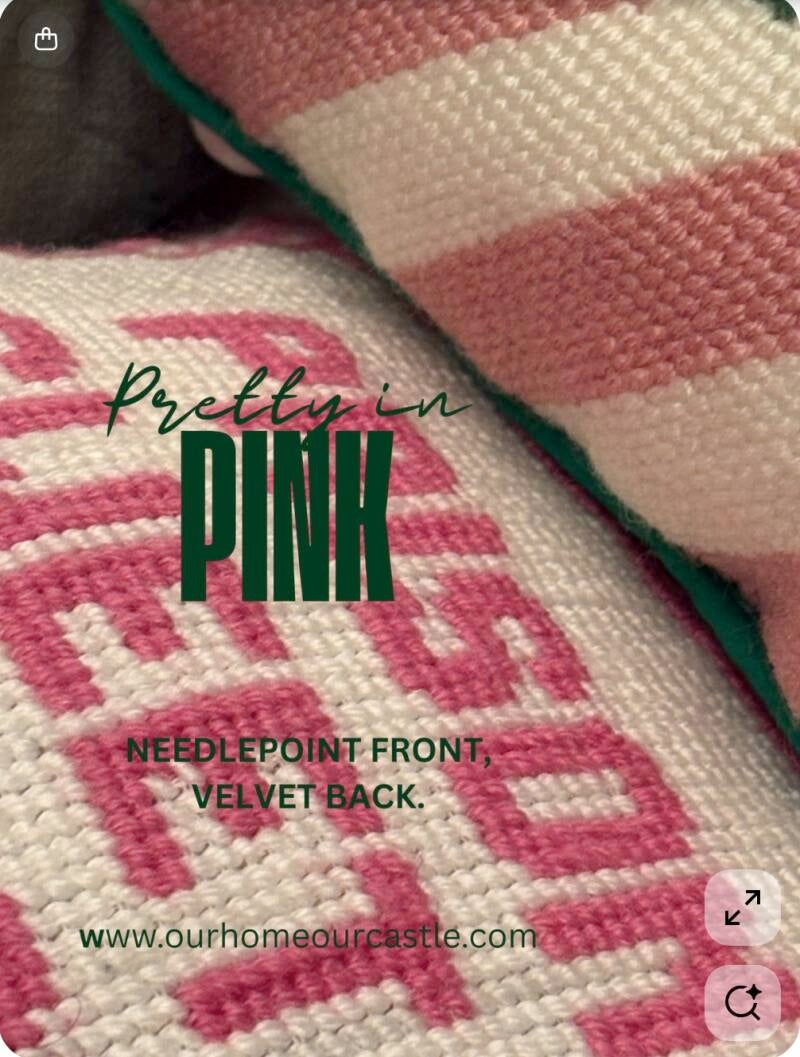
What needlepoint actually is — and what it isn't
Needlepoint is a form of hand embroidery worked on a stiff open-weave mesh called canvas. Thread — traditionally wool, though silk and cotton are equally at home — is pulled through the holes in the canvas, stitch by stitch, until every square of the mesh is covered. The result is dense, structured, and extraordinarily durable. It doesn't fray. It doesn't fade quickly. It holds its shape across decades.
This is not cross-stitch. Cross-stitch works in X-shaped stitches on looser fabric, leaving the background visible. Needlepoint covers everything — no canvas is left exposed. The surface becomes a unified, textile-like field of colour and texture. Think less sampler on a kitchen wall, more tapestry destined for a very good sofa.
Needlepoint, cross-stitch, embroidery — what's the difference?
People use these words interchangeably. They shouldn't. Here's how they actually sit:
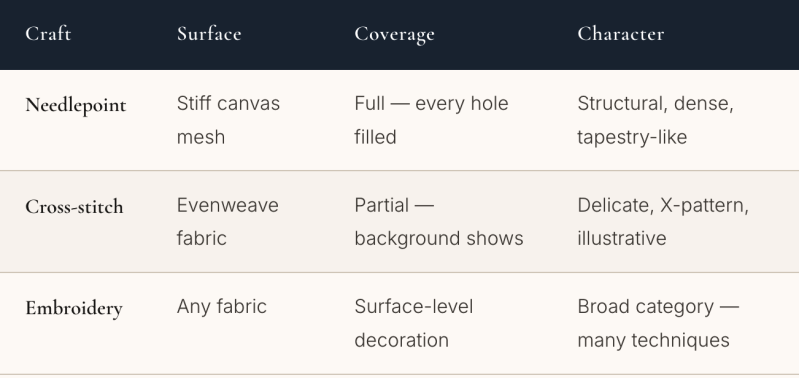
Think of embroidery as the umbrella. Needlepoint and cross-stitch are the very different relatives sheltering underneath it. They share a thread and a needle, and almost nothing else.
A brief and rather glorious history
Needlepoint didn't begin as a hobby. It began as a statement of wealth, skill, and taste. The great tapestries of medieval Europe — the kind you see behind velvet ropes in chateaux — are needlepoint's direct ancestors. By the 17th century, English country houses were filling their chairs, footstools, and bed hangings with hand-worked canvas. It was slow, costly, and considered a mark of refinement to both make and own.
The American tradition took root in the colonial era and flourished through the 20th century — particularly in East Coast country clubs and Upper East Side apartments where a well-made needlepoint pillow was simply part of the furniture. Then fast décor arrived. Mass production made everything cheaper and quicker and largely identical. Needlepoint went quiet.
Now it's back. And this time, it has something to say.
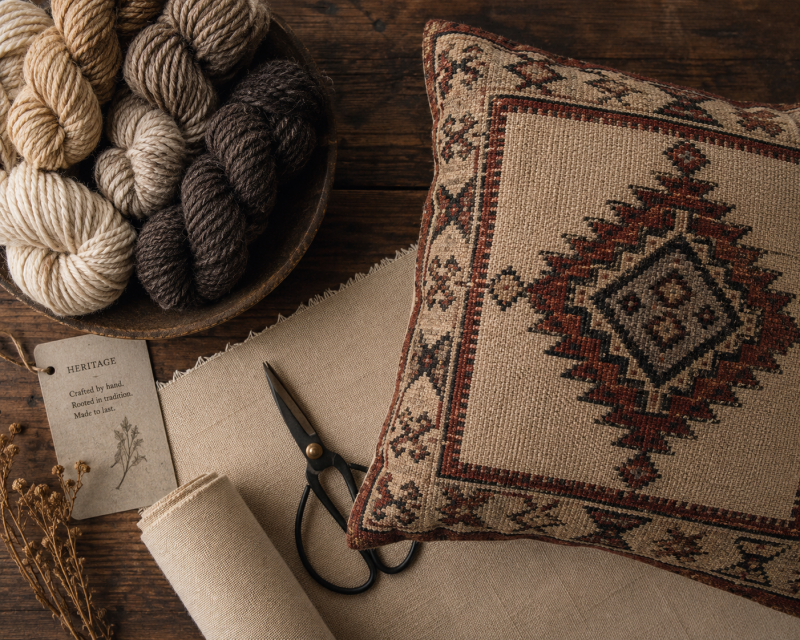
The materials haven't changed in four centuries. The things being said with them have.

What goes into making a needlepoint pillow — stitch by stitch
- The design. Every motif — every letter, every nautical anchor, every irreverent phrase — is drawn directly onto the canvas by hand. No printing. No shortcuts.
- Colour selection. Wool threads are chosen for each section. This is where a piece gets its personality — the right navy, the right terracotta, the shade of white that reads warm rather than cold.
- The stitching. Thousands of individual stitches, placed through the canvas mesh one at a time. This is the slow part. It is also the point.
- Blocking. The finished canvas is dampened and stretched back into its true shape — needlepoint can shift slightly during stitching and blocking restores it to precision.
- Finishing. A backing fabric is chosen and the canvas is made into a pillow — ready to be sat next to, admired, and eventually handed down.

Why a needlepoint pillow is different from any other pillow
A needlepoint pillow isn't bought on impulse. It isn't decorating a trolley with seventeen others like it. It isn't the result of an algorithm deciding what sells.
It is a specific object, made by specific hands, with a specific point of view. The weight of it is real. The texture — that slightly raised, woven surface — catches light in a way printed fabric never does. It sits differently on a sofa. It reads as considered, because it was.
There is also this: a needlepoint pillow has a lifespan measured in decades, not seasons. It doesn't pill. It doesn't fade in the first wash. It is, by design, the opposite of disposable.
Why needlepoint — and why now
There is a particular fatigue that comes from interiors that look like everyone else's. From scrolling a shop and seeing the same cushions in forty tabs. From decorating a home that could belong to anyone.
Needlepoint is the antidote to that. Not because it's expensive or rare — though it is both — but because it is irreducibly personal. Even a standard design, stitched by hand, carries the decisions made in its making: this colour, this thread weight, this finish. No two are quite identical.
And then there are the words. The phrases stitched into cushions that say the thing you'd rather not hang on a gallery wall but absolutely want said in your living room. That is what Our Home Our Castle is built around — the idea that your home should speak in your voice. Specifically. Without apology.
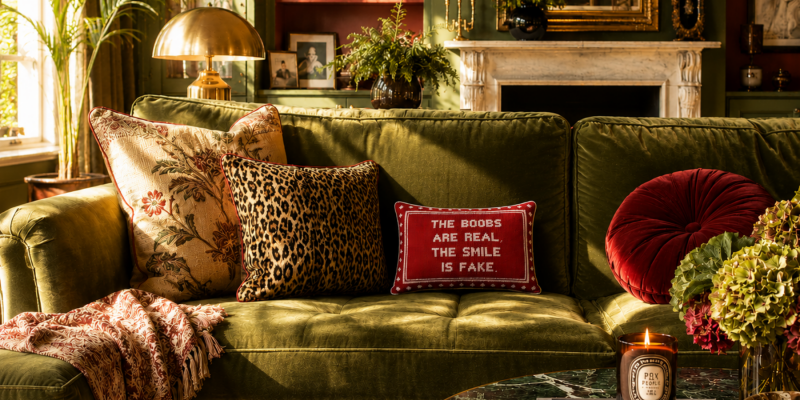
Handstitched in Uster, Switzerland. Ready for wherever in the world you call home.

Add comment
Comments